

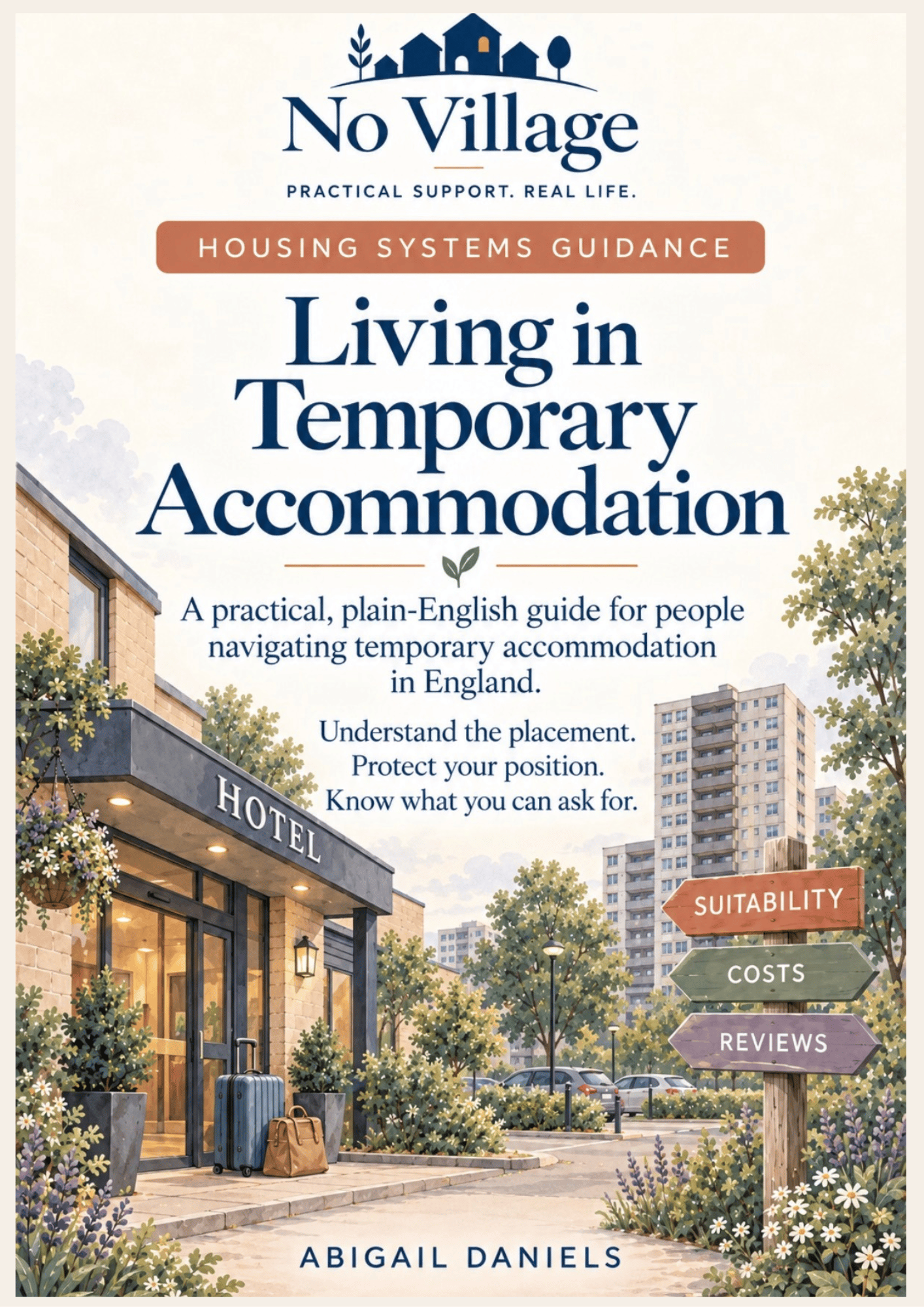
Living in Temporary Accommodation | Housing Rights Guide (England)
Living in Temporary Accommodation
A practical 104-page guide to temporary accommodation, housing rights and homelessness procedures in England. Includes 17 printable tools to help you understand your placement, check housing costs, record concerns and prepare for important decisions.
Being placed in temporary accommodation can sound straightforward: the council finds somewhere for you to stay while your housing situation is dealt with.
In reality, you may be trying to understand what homelessness duty the council owes you, whether your accommodation is suitable, how your housing costs will be covered or what happens if you are moved again.
You may be living in a hotel, B&B, hostel, shared accommodation or temporary property while managing children, health conditions, caring responsibilities, employment or financial pressures.
And when you don't have reliable family, friends or practical support, navigating the housing system can become even harder.
Living in Temporary Accommodation helps you understand the different stages, identify questions to ask, keep essential information organised and explore what to do when something isn't working.
Understand the placement. Protect your position. Know what you can ask for.
What's included in the guide?
The guide explains key aspects of temporary accommodation and homelessness support in England.
Understanding your temporary accommodation
- How temporary accommodation works and the different homelessness duties councils may owe.
- The difference between interim accommodation, the relief duty and the main housing duty.
- Understanding placement letters, occupancy agreements and council decisions.
- What to check during your first 48 hours in temporary accommodation.
- What happens when you are moved between temporary accommodation placements.
Housing costs and affordability
- Understanding rent, service charges and other accommodation costs.
- Checking Housing Benefit, Universal Credit and council records after moving.
- Questions to ask when charges are unclear or accommodation is difficult to afford.
- Preparing for changes to your housing costs or circumstances.
Suitability, health and family needs
- Understanding what councils should consider when assessing accommodation suitability.
- Health conditions, disability, accessibility and reasonable adjustments.
- Children, schools, SEND support and continuity of education.
- The September 2026 temporary accommodation notification duty and when it applies.
- Pregnancy, babies and restrictions affecting family placements in B&B accommodation.
- Out-of-area placements and their effects on employment, healthcare, schools and support networks.
- Domestic abuse, personal safety and safeguarding concerns.
- Repairs, damp, mould, overcrowding, housing hazards and shared accommodation.
- Pets, belongings and personal property.
Decisions, challenges and moving on
- Raising concerns about unsuitable temporary accommodation.
- Understanding when statutory suitability review rights may apply and when different challenge routes are needed.
- Responding to short-notice moves and changes in circumstances.
- Making complaints and finding specialist housing advice.
- Understanding longer-term housing offers and the risks of refusing or leaving accommodation.
- Preparing for your next move.
17 printable temporary accommodation tools
Alongside the guidance, you'll receive 17 practical worksheets, checklists, templates and planning tools, including:
- My Temporary Accommodation Snapshot.
- What Duty / Placement Am I Under?
- My First 48 Hours Checklist.
- Who Is Responsible for What?
- My Temporary Accommodation Cost Map.
- Housing Benefit and Housing-Cost Checklist.
- My Suitability Needs Map.
- Health, Disability and Access Impact Record.
- Child, School and SEND Continuity Plan.
- Out-of-Area Impact Map.
- Belongings and Personal Property Plan.
- Repairs, Conditions and Hazards Record.
- Move and Transfer Impact Record.
- Preparing for a Suitability Review.
- Longer-Term Offer Reality Check.
- My Next Three Temporary Accommodation Actions.
- My Temporary Accommodation Scaffolding Plan.
These tools help you keep track of important information, identify outstanding questions, prepare for conversations and record how accommodation arrangements affect your everyday life.
Who is this guide for?
This guide is for people in England who are:
- Living in temporary accommodation arranged by a local council.
- Staying in emergency accommodation, a hostel, hotel or B&B.
- Unsure what homelessness duty the council owes them.
- Concerned that their temporary accommodation is unsuitable.
- Struggling with rent, service charges or Housing Benefit arrangements.
- Living in accommodation that does not adequately meet health, disability or accessibility needs.
- Managing children's education, SEND needs or caring responsibilities after being moved.
- Placed away from their local area, employment or support network.
- Facing repeated moves, short-notice transfers or uncertain housing arrangements.
- Considering a suitability review, complaint or other challenge to a housing decision.
- Preparing for an offer of longer-term accommodation.
You do not need to understand housing legislation before using the guide.
Practical support without more pressure
You do not need to read all 104 pages in order.
Start with the problem you're facing now.
If you've just been placed in temporary accommodation, use the first 48 hours checklist.
If you're worried about affordability, start with the housing costs and benefits sections.
If your accommodation is unsuitable, use the suitability and impact tools to help organise your concerns and prepare questions.
If you've received a decision or an offer that may affect your housing rights, seek timely specialist advice before taking action.
The aim isn't to give you more paperwork. It's to make important information easier to manage when you're already dealing with housing uncertainty.
Use what helps. Leave what doesn't.
Part of the No Village Housing Systems Library
No Village creates practical resources for people navigating complicated systems without enough safe, reliable or accessible backup.
Temporary accommodation can create substantial hidden work, especially when people are expected to coordinate moves, manage benefits, transport children, protect belongings, attend appointments and respond to decisions at short notice.
This guide provides practical scaffolding to help you keep track of what matters and make the impact of those arrangements visible.
Practical support, not assumptions.
Digital download
Format: 104-page digital PDF guide
Includes: 17 printable tools
Region: England only
Price: £7.99
Author: Abigail Daniels
Edition: First Edition, Version 1.0
Published: October 2026
This is a digital download. No physical product will be posted.
The guide and printable tools are licensed for personal or household use.
Organisational distribution, professional use, workshops or training require appropriate permission or a separate licence, except where permitted by law.
For organisational enquiries, visit novillage.co.uk.
Important information
This guide provides general housing information and practical navigation support. It does not provide individual legal advice, determine whether accommodation is legally suitable or guarantee a particular council decision or outcome.
Housing rights, statutory review procedures, deadlines and available remedies depend on individual circumstances and the legal duty under which accommodation is provided. Not every temporary accommodation placement carries the same statutory review rights.
Official national legislation and guidance used in this edition were checked on 30 October 2026.
Housing law, guidance and local arrangements can change. Always check current official information and seek specialist housing advice before taking action that could affect your accommodation or legal rights, particularly where you have received a decision, review notice, deadline or offer of alternative accommodation.
This is an independently published No Village guide and is not produced, approved or endorsed by a local authority, housing provider or government department.